Samsung is set to discontinue the Galaxy Z TriFold globally after just three months on sale (via Bloomberg).
The company will start by ceasing sales of the device in Korea, where it has been on sale since December. Samsung plans to discontinue the device in the United States once it clears its inventory.
Samsung's website already lists the TriFold as "sold out," but customers are still able to buy the device at Samsung stores. It launched in the United States in January and costs $2,899.
The Galaxy Z TriFold is Samsung's first smartphone that has a larger total display area thanks to folding twice, featuring a 10-inch display when opened and a 6.5-inch cover screen when closed, with "minimized creasing." A third of the display is just 3.9mm thick when the smartphone is unfolded.
It contains a 5,600 mAh three-cell battery system with one battery behind each display panel, making it the largest battery that Samsung has used in a smartphone to date. There are three cameras on the rear of the device, including a 200-megapixel wide angle camera, a 12-megapixel ultra wide camera, and a 10-megapixel telephoto camera with 3x optical zoom. There is a 10-megapixel selfie camera on the cover screen and another on the main screen.
Samsung touted unique capabilities for the Galaxy Z TriFold, such as using three different portrait-sized apps side-by-side, watching full-screen content, vertical tablet-style reading, two differently sized hinges that work together with a dual-rail structure, and an alarm that alerts the user if it's folded incorrectly.
Apple today launched its atrial fibrillation history feature for Apple Watch in mainland China.
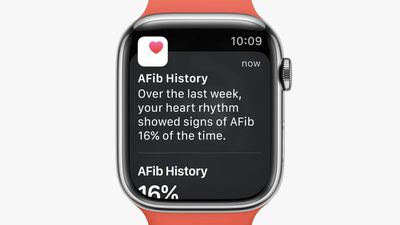
Since 2022, Apple Watch in the U.S. has supported AFib History, which allows users diagnosed with atrial fibrillation to view an estimate of how frequently their heart is in this type of irregular rhythm.
The feature analyzes pulse rate data collected by a photoplethysmography (PPG) sensor to identify episodes consistent with AFib and provides the user with a retrospective estimate of AFib burden (a measure of the amount of time spent in AFib during past Apple Watch wear). Apple says the feature is intended for individuals aged 22 years or older who have been diagnosed with atrial fibrillation by a physician.
Capabilities like ECG and AFib tracking are typically classified as medical or quasi-medical functions, requiring approval from China's National Medical Products Administration (NMPA), hence the delayed launch.
ECG, Irregular Heart Rhythm Notifications, and AFib History are features that can be used by Apple Watch owners in over 150 countries worldwide. Apple maintains a dedicated list of Apple Watch feature availability on its website.
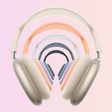
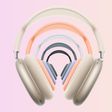
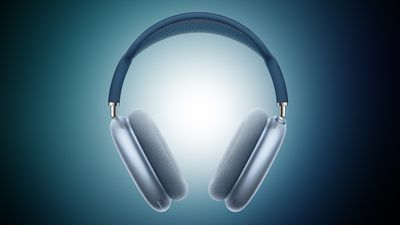
Apple refreshed the AirPods Max today, and the main new addition is an H2 chip that replaces the H1 chip. The H2 chip has previously been used in the AirPods 4 and the AirPods Pro 2 and later, but it's new to the AirPods Max. It brings multiple audio improvements alongside an updated high dynamic range amplifier.
We've listed all of the audio features that are new to the AirPods Max according to Apple.
Active Noise Cancellation - The AirPods Max 2 have up to 1.5x more active noise cancellation because of the more powerful H2 chip and a new computational audio algorithm that detects and counters external sound.
Adaptive Audio - The AirPods Max support Adaptive Audio, adjusting the level of ANC based on your environment.
Transparency - Apple says it is using a new digital signal processing algorithm built for the H2 and the AirPods Max microphone array to make Transparency sound more natural. Your own voice will sound more realistic, and so will other sounds. Transparency lets you hear what's going on around you, with environmental noise filtered through the AirPods Max microphones.
Loud Sound Reduction - Adaptive Audio includes Loud Sound Reduction and the AirPods Max will automatically reduce loud environmental sounds like lawn mowers or construction equipment.
Personalized Volume - Another Adaptive Audio feature, Personalized Volume learns your volume preferences across different environments over time and automatically adjusts.
Conversation Awareness - When you start to talk, Conversation Awareness kicks on and lowers the volume of what you're listening to while amplifying voices so you can hear a response. When you're done talking, the sound returns to its previous volume.
High-fidelity audio improvements - Apple says the H2 chip and a new high dynamic range amplifier provide more headroom for the driver, resulting in richer bass, more natural vocals, and improved localization of instruments. Users can expect more accurate and consistent bass along with more natural sounding mids and highs.
Adaptive EQ - Apple retuned Adaptive EQ for the H2 chip, and the feature now extends to higher frequencies. Adaptive EQ uses inward-facing microphones to sample what you're hearing, adjusting playback in real-time. According to Apple, users will get a more consistent listening experience across different fits, movements, and ear geometry.
Voice Isolation - Voice Isolation isolates your voice in noisy environments so people can hear you when you're on a call. Voice Isolation also lets creators capture high-quality vocals.
Reduced wireless audio latency - Apple says latency is lower with the H2 chip in the AirPods Max 2. The AirPods Max support Bluetooth 5.3, up from Bluetooth 5.0 in the prior model.
There are other features enabled by the H2 chip that aren't tied directly to audio, like Live Translation, camera remote functionality, and the option to activate Siri without using "Hey." The AirPods Max 2 also still have all of the other features from the original AirPods Max, like personalized spatial audio, quick pairing, device switching, and more.
Apple did not make other design changes to the AirPods Max, and the overall fit and look have not been updated. Compared to the AirPods Pro 3, the main AirPods Max benefit is lossless audio. With a wired USB-C connection to a device, the AirPods Max offer 24-bit 48kHz lossless audio, which the AirPods Pro can't match.
The AirPods Max are priced at $549, and Apple plans to accept pre-orders on Wednesday, March 25. A launch will follow in early April, but Apple hasn't provided a specific date yet.
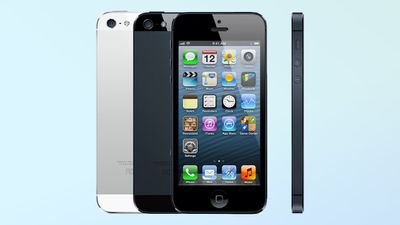
The iPhone 5 that launched back in 2012 is now considered obsolete, according to Apple's list of vintage and obsolete products. Apple moved the iPhone 5 and the 8GB iPhone 4 from the vintage list to the obsolete list today.
A device is "vintage" when it has been five years since it was last distributed for sale, and "obsolete" at the seven-year mark, though Apple sometimes stretches its timelines. For vintage products, Apple retail stores and Apple Authorized Service Providers can provide repairs if the required parts are available. Devices that are obsolete are generally not eligible for repair and Apple stops providing repair components.
Apple released the iPhone 5 in 2012 and discontinued it in 2013 after launching the iPhone 5s and the iPhone 5c. The iPhone 5 was added to the vintage products list in 2018, at which point repairs became limited based on parts availability. Now that the device has moved to the obsolete list, repairs will be largely unavailable.
The iPhone 5 featured an updated design with a glass and aluminum body, a taller 4-inch display, LTE support, and the first-ever Lightning port that replaced the 30-pin connector.
As for the 8GB iPhone 4 that was also added to the obsolete list, Apple introduced it in 2011 and then discontinued it in 2013. Both the 8GB iPhone 4 and the iPhone 5 were sold as low-cost devices in emerging markets after being discontinued in the United States.
Apple today introduced the second-generation version of its over-ear AirPods Max headphones, and some of the software requirements in the fine print give us some insight into when Apple's iOS 26.4 update will be released to the public.
To use several of the added features like Live Translation, the AirPods Max 2 will need to be paired with an iPhone running iOS 26.4, an iPad running iPadOS 26.4, or a Mac running macOS Tahoe 26.4.
The AirPods are set to launch in early April, which means iOS 26.4 and its sister updates will need to launch during the same time frame. iOS 26.4 will be here by the first week of April, and it could even launch before the end of March.
We're at the fourth beta now, so the release candidate version could come at any time. The release candidate likely includes AirPods Max 2 mentions in the code, so Apple was probably holding back on providing it to developers and public beta testers until the AirPods Max 2 were announced.
Apple plans to begin accepting preorders for the AirPods Max 2 on Wednesday, March 25. There is no more specific launch date than "early April," which suggests the first week and a half of the month.
Features that require iOS 26.4 include Live Translation, Adaptive Audio, Conversation Awareness, "Siri" wake word support, Voice Isolation, and the new Digital Crown controls for using the AirPods Max as a camera button. Apple says the feature set will require the latest AirPods Max firmware as well as the iOS 26.4, iPadOS 26.4, and macOS Tahoe 26.4 software.
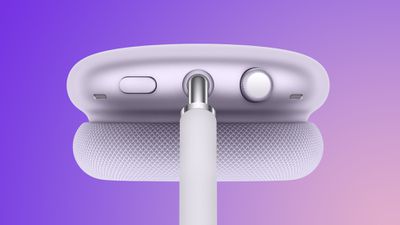
While the new AirPods Max 2 have the same overall design as the previous AirPods Max, the Digital Crown has received a small but useful upgrade.
On the AirPods Max 2, a new Camera Remote feature allows you to press the Digital Crown to take a photo and start or stop video recording while using Apple's Camera app or compatible third-party camera apps on an iPhone or iPad.
Apple says this feature requires AirPods Max 2 that are running the latest firmware and paired with iPhone and iPad models running iOS 26.4 or iPadOS 26.4 or later. Those software versions are still in beta testing, but they will be released in time for the AirPods Max 2 launch in early April, barring any unforeseen delays.
Here are all of the Digital Crown controls on AirPods Max 2:
Turn for volume control
Press once to play or pause media
Press once to answer a call or mute or unmute
Press once for camera remote
Press twice to end a call
Press twice to skip forward
Press three times to skip back
Press and hold for Siri
Other upgrades compared to the previous generation include the H2 chip, increased active noise cancellation, improved sound quality, and features such as Adaptive Audio, Conversation Awareness, Voice Isolation, and Live Translation. In addition, AirPods Max 2 support a shorter "Siri" command alongside the longer "Hey Siri."
Read the rest of our AirPods Max 2 coverage to learn more:
AirPods Max 2 will be available to order on Apple.com and in the Apple Store app starting Wednesday, March 25, with U.S. pricing set at $549. Apple says the headphones will launch in early April, but it has yet to provide a specific release date.
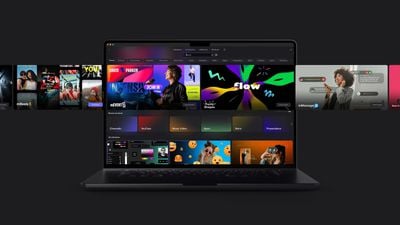
Apple today acquired MotionVFX, a major developer of plugins, visual effects, and motion graphics tools for Final Cut Pro.
MotionVFX is a Polish software company founded by Szymon Masiak in 2009. It creates high-quality plugins, transitions, templates, and visual effects (VFX) for video editors, specializing in tools for Final Cut Pro, DaVinci Resolve, and Apple Motion. From MotionVFX's website today:
We are extremely excited to share that MotionVFX is joining the Apple team to continue to empower creators and editors to do their best work.
For over 15 years, we've been on a mission to create world-class, visually inspiring content and effects for video editors. From the very beginning, we’ve been all about quality, ease of use, and great design. These are also the values that we admire most in Apple’s products, and we’re thrilled to be able to embrace them together.
We'd like to take this opportunity to thank all our amazing customers and supporters who have been with us through all these years. You inspired us, you challenged us, and you helped our products become what they are today. We are incredibly grateful to be part of this amazing community and excited to continue our work to serve you.
This is the beginning of something truly wonderful!
MotionVFX has long been one of the most prominent third-party developers in the Final Cut Pro ecosystem. Its plugins are widely used by YouTubers, filmmakers, and broadcast editors looking to add high-end motion graphics and stylized visual effects without building them from scratch.
Among its most popular tools are mFilmLook, which provides cinematic color grading and film emulation effects, and mO2, a powerful plugin that enables the use of 3D models directly inside Final Cut Pro and Apple Motion. MotionVFX also offers Design Studio, a panel extension that allows users to browse and install effects and templates directly within Final Cut Pro.
MotionVFX's expertise in templates, transitions, and 3D workflows could help Apple improve Final Cut Pro's built-in graphics tools, potentially reducing reliance on third-party plugins. The acquisition will likely strengthen Apple's latest push into professional video production, especially as the company continues to bolster its new Apple Creator Studio subscription service.
MotionVFX's 70 employees today joined Apple as part of the acquisition. The company was already a worldwide partner of Apple.
MotionVFX did not indicate whether its existing products will continue to be sold independently following the acquisition. For now, the company's plugin catalog remains available through its website and the MotionVFX marketplace.
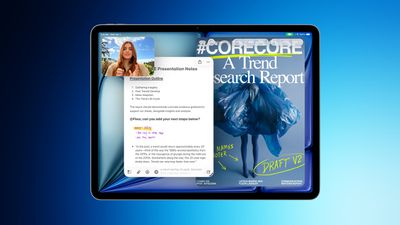
Last week, Amazon introduced discounts on the brand new M4 iPad Air, and you can still get up to $100 off these brand new models today. Additionally, Amazon has deepened the discounts on a few of these models, and all remain in stock with free delivery around March 21.
Note: MacRumors is an affiliate partner with Amazon. When you click a link and make a purchase, we may receive a small payment, which helps us keep the site running.
Specifically, Amazon has up to $80 off the 11-inch M4 iPad Air and up to $100 off the 13-inch M4 iPad Air. All of these discounts have been automatically applied and do not require a coupon code or a Prime membership.
The new iPad Air features the M4 chip, C1X modem, and N1 networking chip, which brings support for Wi-Fi 7 and Bluetooth 6. In terms of design, the 2026 models are identical to the 2025 iPad Air tablets, with an edge-to-edge display, slim bezels, and aluminum chassis.
If you're on the hunt for more discounts, be sure to visit our Apple Deals roundup where we recap the best Apple-related bargains of the past week.
Deals Newsletter
Interested in hearing more about the best deals you can find in 2026? Sign up for our Deals Newsletter and we'll keep you updated so you don't miss the biggest deals of the season!
The AirPods Max 2 feature the H2 chip, improved Active Noise Cancellation, and Adaptive Audio capabilities, but the design and much of the hardware remains unchanged.
Most notably, the overall industrial design is identical. AirPods Max 2 retain the same aluminum ear cups, stainless steel headband frame, telescoping arms, and knit mesh canopy introduced with the original model. The dimensions, weight, and overall construction appear to be unchanged, meaning the headphones look and feel the same as previous versions. The knit mesh canopy is also the same despite criticism over time that the fabric can stretch or lose tension with prolonged use.
The Smart Case has also not been updated and the device still uses the same case introduced in 2020, which covers the ear cups while leaving the headband exposed and places the headphones into an ultra-low-power state when stored inside.
The Smart Case drew criticism when AirPods Max first launched, with many reviewers pointing to its unusual appearance and the limited protection it offers compared to traditional headphone cases. Some users also reported that the material damaged easily and creased over time.
Because AirPods Max lack a dedicated power button, placing the headphones in the Smart Case is effectively the only reliable way to force them into their lowest-power standby mode. Without the case, the headphones can remain active for extended periods. Despite these criticisms, Apple has not redesigned or replaced the Smart Case.
The acoustic hardware also appears to be essentially the same across generations. The AirPods Max 2 continue to use Apple's custom 40mm dynamic drivers and the same basic acoustic architecture introduced with the original model. However, they add a new custom high dynamic range amplifier and updated digital signal processing, meaning sound improvements are likely driven more by amplification and processing changes than by redesigned drivers.
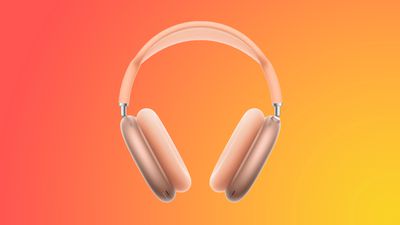
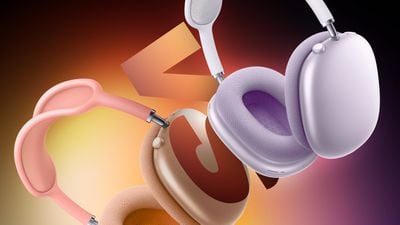
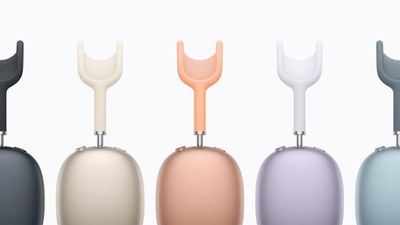
Color options have also remained consistent across the last two versions of the headphones. The 2024 USB-C refresh introduced Starlight, Midnight, Blue, Purple, and Orange, and those same finishes carry over to the AirPods Max 2. These replaced the original lineup of Silver, Space Gray, Sky Blue, Pink, and Green.
Battery life is also unchanged. AirPods Max continue to offer around 20 hours of listening time with Active Noise Cancellation and Spatial Audio enabled, matching Apple's original estimate.
Apple has now announced the AirPods Max 2, bringing the first major hardware upgrade to Apple's over-ear headphones since their debut. So how does the new model compare with both earlier versions of AirPods Max?
In late 2020, Apple announced the AirPods Max, a whole new AirPods variant with an over-ear design. In September 2024, the company refreshed the AirPods Max's selection of color options and swapped the Lightning port for USB-C, enabling 24-bit, 48 kHz lossless audio over a wired connection.
Now, with the arrival of the AirPods Max 2, Apple has introduced a far more substantial upgrade than the 2024 refresh. The new model adds the H2 chip, more powerful Active Noise Cancellation, improved Transparency Mode, Adaptive Audio features such as Conversation Awareness and Personalized Volume, updated Bluetooth 5.3 connectivity with reduced latency, and enhancements to Spatial Audio and sound quality.
Following the announcement, the full range of differences between the original Lightning model, the USB-C refresh, and AirPods Max 2 are outlined below:
AirPods Max (2020, Lightning)
AirPods Max (2024, USB-C)
AirPods Max 2 (2026)
H1 chip
H1 chip
H2 chip
Active Noise Cancellation
Active Noise Cancellation
Improved Active Noise Cancellation (1.5x stronger)
Siri Interactions (privately respond to Siri announcements by simply nodding their head yes or gently shaking their head no)
Custom high dynamic range amplifier
New digital signal processing algorithm
Spatial Audio
Spatial Audio
Improved Spatial Audio (improved localization of instruments, more accurate and consistent bass response, and more natural-sounding mids and highs)
Lossless Personalized Spatial Audio via USB-C to USB-C cable
Lossless Personalized Spatial Audio via USB-C to USB-C cable
Enhanced audio via Lightning to 3.5mm audio cable
"24-bit, 48 kHz lossless audio" via USB-C to USB-C cable
"24-bit, 48 kHz lossless audio" via USB-C to USB-C cable
Audio recording
Audio recording
"Studio-quality" audio recording
Create and mix audio in Personalized Spatial Audio with head tracking via USB-C to USB-C cable
Create and mix audio in Personalized Spatial Audio with head tracking via USB-C to USB-C cable
Bluetooth 5.0
Bluetooth 5.0
Bluetooth 5.3
Reduced wireless audio latency
Reduced latency audio via Lightning to 3.5mm audio cable
"Ultra-low" latency audio via USB-C to USB-C cable or USB-C to 3.5mm audio cable
"Ultra-low" latency audio via USB-C to USB-C cable or USB-C to 3.5mm audio cable
Lightning port
USB-C port
USB-C port
Available in Silver, Space Gray, Sky Blue, Pink, and Green
Available in Starlight, Midnight, Blue, Purple, and Orange
Available in Starlight, Midnight, Blue, Purple, and Orange
Released December 2020
Released September 2024
Release in April 2026
Now discontinued
Now discontinued
$549
The original AirPods Max with Lightning are becoming increasingly difficult to find as remaining inventory has gradually dried up over the past two years. While some third-party retailers may still have limited stock or refurbished units available, the model is no longer widely sold. For buyers who can still locate a pair at a substantial discount, the Lightning version can remain an appealing option. It offers the same distinctive design, premium build quality, Active Noise Cancellation, Transparency mode, and Spatial Audio support that defined the product when it launched in 2020. If you primarily use AirPods Max wirelessly for casual listenin, have no interest in the newer software capabilities, or have other Lightning devices, the original model still delivers a good core experience.
The AirPods Max with USB-C, introduced in 2024, remain widely available and until today represented Apple's current version of the headphones. Aside from the switch from Lightning to USB-C and a new set of color options, the hardware is largely identical to the original model. A firmware update alongside iOS 18.4 restored wired audio input and enabled 24-bit, 48 kHz lossless audio over a USB-C connection when used with a USB-C to USB-C cable. This gives the USB-C model a clear advantage over the Lightning version for users who want the best possible wired audio quality. It also enables creator-focused capabilities such as Lossless Personalized Spatial Audio and the ability to create or mix content in Spatial Audio with head tracking. For most users listening wirelessly, however, the overall experience remains very similar to the original model.
The newly announced AirPods Max 2 represent the first meaningful upgrade to the product since its debut. The new model introduces Apple's H2 chip, enabling significantly improved Active Noise Cancellation, enhanced Transparency Mode, and Adaptive Audio features such as Conversation Awareness, Personalized Volume, and Voice Isolation. Apple has also improved Spatial Audio performance and added Bluetooth 5.3 with reduced wireless latency. Together, these upgrades bring the over-ear AirPods much closer to the capabilities offered by Apple's latest in-ear AirPods models.
For buyers deciding between generations, the choice largely comes down to how important the new features are. The original AirPods Max still deliver the premium design, sound quality, and wireless listening experience that made them popular. However, for those who want stronger noise cancellation, new features like Live Translation, and the most future-proof option, AirPods Max 2 are clearly the model to choose.
Existing owners of the original AirPods Max may want to weigh the benefits of the H2 chip, improved Active Noise Cancellation, Adaptive Audio features such as Conversation Awareness and Personalized Volume, and reduced wireless latency. Users with the Lightning version may be more inclined to upgrade given their device's age, while those with the newer USB-C variant may find the improvements less essential if they are satisfied with the current feature set. For frequent travelers, people who regularly listen in noisy environments, or anyone who simply wants the most advanced version of Apple's over-ear headphones, the upgrade may still be worthwhile.
AirPods frequently see hefty discounts on Amazon and other third-party retailers, so stepping up to the AirPods Max 2 may be more worth it if you can take advantage of one of those deals. The AirPods Max often see solid discounts, so it is always worth seeking the best price using our Deals roundup.
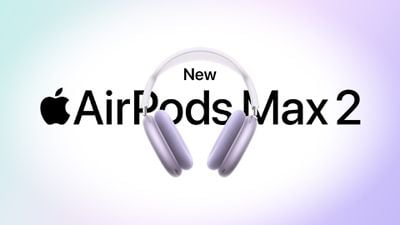
Apple today unveiled AirPods Max 2, with key upgrades including the H2 chip, increased active noise cancellation, improved sound quality, and features such as Adaptive Audio, Conversation Awareness, Voice Isolation, and Live Translation.
The new AirPods Max have the same overall design as the previous generation, with most of the new features coming from the upgrade to the H2 chip:
- Adaptive Audio adjusts the levels of ANC and Transparency in response to the environment automatically to optimize the audio experience.
- Conversation Awareness helps lower content volume and reduce background noise when a user starts speaking to someone nearby.
- Live Translation, powered by Apple Intelligence, helps users communicate across languages in person.
- Voice Isolation uses advanced computational audio powered by H2 to prioritize the voice during calls, while blocking out ambient noise.
AirPods Max 2 also support Personalized Volume, which adjusts the volume based on a combination of your surroundings and your volume preferences.
With the H2 chip, Apple says the AirPods Max 2 deliver up to 1.5× more effective active noise cancellation than the previous generation, and it promised that the Transparency mode that lets in some ambient noise sounds even more natural.
AirPods Max 2 feature a new high dynamic range amplifier for "even cleaner audio," and Apple says Spatial Audio content "sounds better than ever." The headphones also have reduced wireless audio latency compared to the previous generation.
The headphones still have a USB-C port for charging and lossless audio. Apple advertises up to 20 hours of battery life on a single charge with active noise cancellation enabled, which is unchanged compared to the previous generation.
Like the previous AirPods Max running iOS 18.4 or newer, the AirPods Max 2 support 24-bit, 48 kHz lossless audio with the included USB-C cable, for the highest-quality wired playback. For wireless connectivity, AirPods Max 2 support Bluetooth 5.3, whereas the previous AirPods Max support Bluetooth 5.0.
Color options remain Midnight, Starlight, Orange, Purple, and Blue.
A new Camera Remote feature allows users to press the Digital Crown on the AirPods Max 2 to take a photo and start or stop video recording while using Apple's Camera app or compatible third-party camera apps on an iPhone or iPad.
AirPods Max 2 will be available to order on Apple.com and in the Apple Store app starting Wednesday, March 25 in the U.S. and more than 30 other countries, and they launch on an unspecified day in early April. In the U.S., AirPods Max 2 have the same $549 price as the previous AirPods Max, which Apple is no longer selling.
AirPods Max 2 come with a Smart Case, which has the same design as it always has. The headphones enter an ultra-low-power state when placed in this carrying case, which is fairly important, as the headphones still lack a power button.
These are technically the third AirPods Max headphones to be released. The original AirPods Max with a Lightning port launched in December 2020, and the headphones received a minor update with a USB-C port and new color options in September 2024.
Amazon today has the AirPods Pro 3 available for $209.99, down from $249.00. This is only about $10 higher when compared to the Amazon all-time low price, which has been hard to come by in recent weeks.
Note: MacRumors is an affiliate partner with Amazon. When you click a link and make a purchase, we may receive a small payment, which helps us keep the site running.
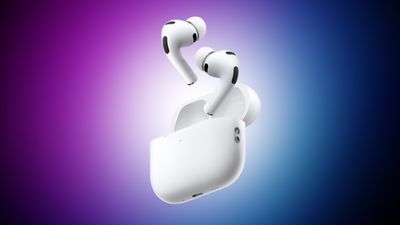
This model of the AirPods Pro launched in September 2025 and has 2x better Active Noise Cancellation than the previous generation, better audio quality, a revised fit that's meant to improve comfort and stability, Live Translation for in-person conversations, and heart rate sensing for workouts.
If you're shopping for the AirPods 4, Amazon also has a solid discount on the base model at $99.00, down from $129.00. Keep up with all of this week's best discounts on Apple products and related accessories in our dedicated Apple Deals roundup.
Deals Newsletter
Interested in hearing more about the best deals you can find in 2026? Sign up for our Deals Newsletter and we'll keep you updated so you don't miss the biggest deals of the season!
Apple's original film "F1: The Movie" yesterday won an Oscar for Best Sound at the 98th Academy Awards.
The film, produced by Jerry Bruckheimer and directed by Joseph Kosinski, received four Oscar nominations in total, including Best Picture. "F1" has already picked up multiple honors across the industry, including Best Editing and Best Sound at the Critics Choice Awards and Best Sound at the BAFTA Film Awards.
The film stars Brad Pitt as a once-promising Formula 1 driver whose career was nearly ended by a crash in the 1990s. Decades later, he returns to the sport after being recruited by his former teammate to help save a struggling team, partnering with an ambitious rookie driver.
In 2022, Apple's "CODA" became the first streaming film to win Best Picture, with Troy Kotsur winning Best Supporting Actor and Siân Heder winning Best Adapted Screenplay. Apple later won Best Animated Short Film for "The Boy, the Mole, the Fox and the Horse." More recently, "Killers of the Flower Moon" received several Oscar nominations, including Best Actress for Lily Gladstone.
"F1" is now available to stream globally on Apple TV. Apple previously said it is the highest-grossing sports feature film of all time.
In his Power On newsletter today, Bloomberg's Mark Gurman reiterated that iOS 27 will be similar to 2009's Mac OS X Snow Leopard, in the sense that one of Apple's biggest priorities is bug fixes for improved performance and stability.
During WWDC 2008's State of the Union, Apple showed a slide that said Mac OS X Snow Leopard had "0 new features," as it opted to focus on performance and stability improvements. Technically, the update did include some smaller new features, but Apple was overwhelmingly focused on bug fixes and under-the-hood changes on the Mac.
"We've built on the success of Leopard and created an even better experience for our users from installation to shutdown," said Apple's former software engineering chief Bertrand Serlet. "Apple engineers have made hundreds of improvements so with Snow Leopard your system is going to feel faster, more responsive and even more reliable than before."
iOS 27 will still get some new features too, including a more personalized version of Siri. The update should be announced in June and released in September.
Apple just launched the new line of Studio Displays this month, and today Amazon has introduced the first discount on the Standard Glass model with Tilt-Adjustable Stand. You can get this Studio Display for $1,499.00, down from $1,599.00, a new all-time low price.
Note: MacRumors is an affiliate partner with Amazon. When you click a link and make a purchase, we may receive a small payment, which helps us keep the site running.
Last week, Amazon had some initial launch discounts on a few Nano-Texture models of the Studio Display, but only one of these remains. You can still get the Nano-Texture model with Tilt-Adjustable Stand for $1,849.00, down from $1,899.00. Both displays have an estimated delivery date of March 20 for free shipping.
Additionally, Amazon has the Studio Display XDR (Standard Glass with Tilt- and Height-Adjustable Stand) on sale at $100 off this week. You can get this model for $3,199.00, down from $3,299.00, another new record low price.
If you're on the hunt for more discounts, be sure to visit our Apple Deals roundup where we recap the best Apple-related bargains of the past week.
Deals Newsletter
Interested in hearing more about the best deals you can find in 2026? Sign up for our Deals Newsletter and we'll keep you updated so you don't miss the biggest deals of the season!
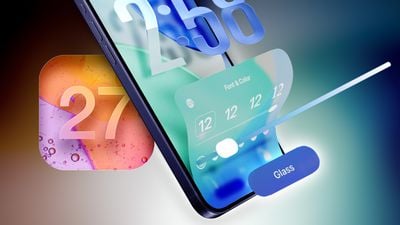
In his Power On newsletter today, Bloomberg's Mark Gurman said the latest internal version of iOS 27 does not have major Liquid Glass design changes, but there might be a new system-wide setting for precisely adjusting the look of the interface.
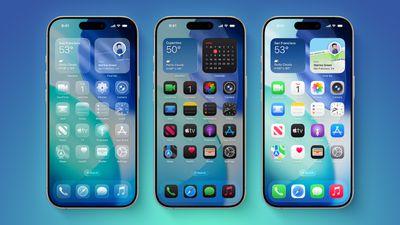
iOS 26.1 lets you choose between "Clear" and "Tinted" options for Liquid Glass, with the "Tinted" look adding more opacity to user interface elements. And with iOS 27, which is expected to be released later this year, Apple might go even further.
iOS 26.2 introduced a slider that allows you to manually adjust the opacity of Liquid Glass, but only for the Lock Screen's clock. Starting with iOS 27, Gurman said the setting might be expanded to the entire operating system.
Apple was initially working on a system-wide Liquid Glass slider for iOS 26, but it ran into engineering challenges when trying to extend it across the entire system, according to Gurman. However, he said Apple could go back to the drawing board and manage to get the system-wide slider working in an iOS 27 version.
"Apple is trying again now for iOS 27," said Gurman, in a social media post referring to the system-wide Liquid Glass slider. "TBD if it lands."
iOS 27 beta testing should begin in June, ahead of a September release.
A second-generation MacBook Neo with a touch screen has gone from a yes to a maybe to a no, according to rumors.
In his Power On newsletter today, Bloomberg's Mark Gurman said Apple has yet to decide whether to bring touch-screen support to any Macs beyond the next high-end MacBook Pro, which is expected to be released in late 2026 or early 2027.
A touch screen would slightly increase the cost of making the MacBook Neo, which is priced as low as $499, so the laptop will likely remain without one for years.
In September 2025, Apple analyst Ming-Chi Kuo said the second-generation MacBook Neo "could" include touch support, but last week he said it "may" not happen after all, and now Gurman has completely ruled out the possibility for now.
"I'd be shocked if a touch screen comes to the Neo in the next three years," said Gurman.
Nevertheless, a second-generation MacBook Neo will likely be released next year, according to Kuo. The key upgrade should be the A19 Pro chip with an increased 12GB of RAM, up from the A18 Pro chip with 8GB of RAM in the current model.
Apple's new Liquid Glass interface introduced across iOS 26, macOS Tahoe, and its other latest software platforms is apparently here to stay.
In his Power On newsletter today, Bloomberg's Mark Gurman said the latest internal versions of iOS 27 and macOS 27 do not have major Liquid Glass design changes. He also mentioned how Apple's new software design chief, Steve Lemay, was "a driving force" behind Liquid Glass and was "deeply involved in its development."
Lemay joined Apple in 1999. He succeeded Alan Dye, who left Apple for Meta at the end of last year. Under his leadership, it is likely that Apple will focus on gradually improving Liquid Glass. This would be similar to Apple's approach with iOS 7, which did away with skeuomorphism in favor of a flat design and was then refined over the years.
Apple already provided iPhone users with a few Liquid Glass customization options through software updates. iOS 26.1 added a "Tinted" option that increases the opacity of Liquid Glass elements across the system, and iOS 26.2 introduced a slider that allows you to adjust the opacity of Liquid Glass for the Lock Screen's clock.
Apple was initially working on a system-wide Liquid Glass slider for iOS 26, but it ran into engineering challenges when trying to extend it across the entire system, according to Gurman. However, he said Apple could go back to the drawing board and manage to get the system-wide slider working in an iOS 27 version.



 Note: MacRumors is an affiliate partner with Amazon. When you click a link and make a purchase, we may receive a small payment, which helps us keep the site running.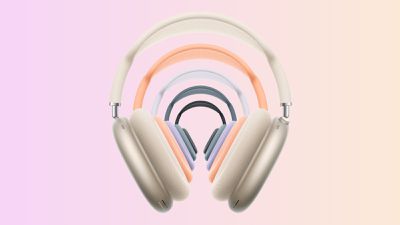
 Note: MacRumors is an affiliate partner with Amazon. When you click a link and make a purchase, we may receive a small payment, which helps us keep the site running.


 Note: MacRumors is an affiliate partner with Amazon. When you click a link and make a purchase, we may receive a small payment, which helps us keep the site running.