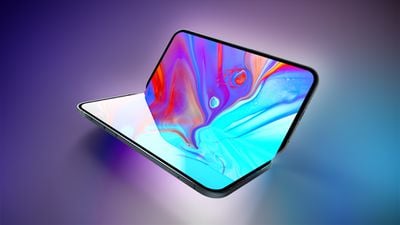
Advanced display panels destined for Apple's first foldable iPhone are reportedly nearing mass production.
The Weibo leaker known as "Instant Digital" today said that Samsung Display is set to begin mass production of OLED panels for the first foldable iPhone in May 2026. Meanwhile, the user "Fixed Focus Digital" claims that the foldable iPhone's screen may be flatter than many of the existing foldable devices currently on sale, suggesting that Apple has largely solved the crease problem.
Previous reports have variously described the Samsung panel as as being "virtually crease free" and having "no crease at all." Bloomberg's Mark Gurman claims that the new display technology Apple is using reduces the crease without eliminating it entirely, but the result is "not perfect."
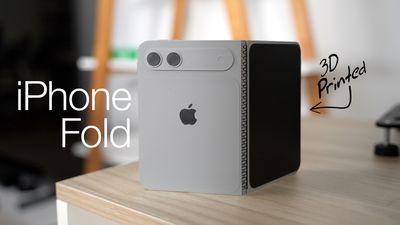
Rumors suggest that Apple's first foldable iPhone will feature a 7.8-inch crease-free inner display, a 5.5-inch cover display, Touch ID, two rear cameras, the A20 chip, and the "C2" modem. It is expected to launch alongside the iPhone 18 Pro and iPhone 18 Pro Max in the fall. Production will almost certainly ramp up as we approach that time of year.
This week was Apple launch week, and we're already seeing solid markdowns on the new M4 iPad Air, M5 MacBook Air, and more. Additionally, below you'll find deals on AirPods 4 with Active Noise Cancellation and Apple Watch Series 11.
Note: MacRumors is an affiliate partner with some of these vendors. When you click a link and make a purchase, we may receive a small payment, which helps us keep the site running.
Amazon this week came back with a notable discount on the AirPods 4 with Active Noise Cancellation, available for $119.99, down from $179.00. This is a solid second-best price on the AirPods 4.
This week was the launch week for all of Apple's new products, and Amazon is already offering solid discounts on many models of the M4 iPad Air. This includes up to $80 off the 11-inch model and up to $100 off the 13-inch model.
MacBook Air and MacBook Pro
What's the deal? Take $49 off M5 MacBook Air and M5 Pro/M5 Max MacBook Pro
Similar to the M4 iPad Air, Amazon is offering multiple discounts across the new M5 MacBook Air and M5 Pro/M5 Max MacBook Pro this week. You'll find $49 off select models right now, without the need of a coupon code.
Apple: The First 50 Years
What's the deal? Take $10 off the new book Apple: The First 50 Years
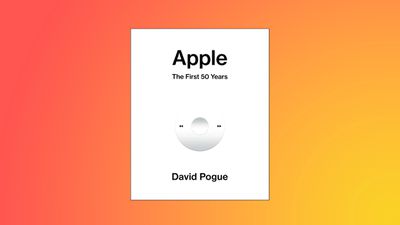
Tech columnist David Pogue released a new book Apple: The First 50 Years earlier this week, and Amazon has it for 21 percent off right now. The 608-page book explores the first five decades of the company's history.
This week, there were two sales on Samsung monitors, split between Amazon and Samsung's own website. On Amazon, there was a big accessory sale this week, and the highlights of the event included big savings on monitors from Samsung, LG, Dell, and more. Samsung's newest Smart Monitor M9 hit the all-time low price of $1,299.99 during the sale, and it's still available now.
On Samsung, you can get a free copy of Resident Evil Requiem with the purchase of select monitors. You'll also find big discounts on TVs and Galaxy products this week.
Apple Watch Series 11
What's the deal? Take $100 off Apple Watch Series 11
Amazon this week has all-time low prices on the Apple Watch Series 11, with $100 discounts across numerous models of the smartwatch. We first started tracking the return of these deals last month, but this sale has now expanded with many more options on both 42mm and 46mm GPS models.
If you're on the hunt for more discounts, be sure to visit our Apple Deals roundup where we recap the best Apple-related bargains of the past week.
Deals Newsletter
Interested in hearing more about the best deals you can find in 2026? Sign up for our Deals Newsletter and we'll keep you updated so you don't miss the biggest deals of the season!
Apple's retail store at the Grand Central Terminal in New York is temporarily closed, but the reason why remains a mystery.
As seen in photos shared by Parker Ortolani, Apple's space on the Main Concourse's East Balcony is covered up with temporary walls and curtains. There is also temporary lighting and audio equipment set up, and a video shared on social media appears to show that Apple is or was recording some sort of production.
Apple is clearly up to something, but exactly what remains anyone's guess. It could be recording a special video that will be part of its 50th-anniversary celebrations, or an upcoming product launch, but there are many possibilities.
Apple Grand Central reopens this Saturday, March 14, at 10 a.m. local time, and it remains to be seen if there will be any visible changes.
Apple's iconic Fifth Avenue store in New York will also be temporarily closed on Monday, March 23, from midnight until 3 a.m. local time, according to a source familiar with the matter. The reason for this closure is also unknown, but past closures have sometimes just been for maintenance on the store's glass cube entrance.
Apple Fifth Avenue is typically open 24/7.
Apple turns 50 on April 1, so we may learn what it was up to in New York over the coming weeks.
Update: According to a photo shared by Merrick Brown, Apple has put up stanchions for people to queue, and a sign says "Guest Check In," so it appears that Apple may be hosting an experience of some kind. However, the temporary walls are still up.
It's been a big week for foldable iPhone rumors. In case you missed any of them, here are five developments that we've covered over the last few days.
Apple is expected to launch the iPhone Fold this September. For everything else we know, be sure to check out our dedicated roundup.
Display Crease
Early reports suggested Apple had solved the crease problem that has plagued many foldables on the market, thanks to a new Samsung-supplied panel that has been described variously as being "virtually crease free" and having "no crease at all." However, the latest report suggests things may have been overstated. Bloomberg's Mark Gurman says the new display technology Apple is using reduces the crease without eliminating it entirely, and that the result is "not perfect," suggesting it may be wise to temper expectations.
Outer Display Camera
Earlier rumors indicated that Apple has opted to use a hole-punch for the front-facing camera on the 5.5-inch outer display. There are no Face ID components under the display (Touch ID is integrated into the side button instead), but whether it will be encased in a familiar pill-shaped cutout was unclear. Gurman has now confirmed that the small hole-punch cutout replaces the pill-shaped notch that appears on today's iPhones, but that the design will still include a surrounding Dynamic Island interface for system alerts and Live Activities.
Inner Display Camera
Early reports suggested Apple intended to adopt under-screen camera technology in the iPhone Fold's 7.8-inch inner display, making it the first all-screen iPhone. Those rumors may have been true at the time, but it looks like Apple has since dropped the idea. Per Gurman's latest report, Apple apparently determined that the under-display approach "produced worse image quality," and it has now decided instead to use a hole-punch cutout, similar to the one on the outer display.
iOS or iPadOS?
Since the iPhone Fold's inner display will be close to an iPad mini in size with a 4:3 aspect ratio, there had been lingering questions about whether it will work like a standard iPhone when closed and an iPad when open, and which OS it will use. This week, Gurman provided an answer. When the device is opened up, the UI will have an iPad-like layout that supports multitasking with two apps side-by-side. Many apps will feature sidebars on the left of the display, and developers will be given tools to adapt their existing apps for the new interface. However, the device will run iOS, not iPadOS. Gurman said it won't support the full range of multitasking features that are available on the iPad, and it won't run existing iPadOS apps.
Storage and RAM
Like the iPhone Air and the iPhone 17 Pro/Max, Apple's first foldable iPhone will feature 12GB of RAM, with Samsung set to begin DRAM shipments in the second quarter of this year in line with Apple's production schedule. Korea-based media outlet The Bellreports that Samsung was able to negotiate a substantially higher price than previous memory contracts with Apple. The higher cost is attributed to tightening global memory supply amid the AI server build-out. As for storage options, Apple will offer the device in 256GB, 512GB, and 1TB capacities, claims reputable leaker Instant Digital, suggesting the top 1TB option could cost nearly $3,000. For a little perspective, a maxed out iPhone Fold could approach the cost of two 1TB iPhone 17 Pro devices.
Parallels Desktop virtualization software is compatible with the new MacBook Neo, according to an update from the company – but Windows VM performance will depend on your intended use case.
Parallels Desktop runs on MacBook Neo in basic usability testing. The Parallels Engineering team has completed initial testing and confirmed that Parallels Desktop installs and virtual machines operate stably on MacBook Neo. Full validation and performance testing is ongoing, and additional compatibility statement will follow if required.
When Apple launched the $599 MacBook Neo this week, some asked whether its A18 Pro chip – which first debuted in the iPhone 16 Pro – would be capable of running Windows via Parallels Desktop. Fortunately, the A18 Pro is based on the same ARM architecture as Apple's M-series chips, which are made specifically for Macs, so the processor isn't an issue.
What could be an issue is what you intend to do inside the virtual machine. The MacBook Neo comes with 8GB of RAM (Apple doesn't offer a memory upgrade option) and a Windows 11 VM requires a minimum of 4GB of RAM to function, which leaves only 4GB for macOS and Mac apps simultaneously.
Parallels states the context plainly: "For light, occasional Windows use, like a legacy business tool, or a Windows-only utility, MacBook Neo may provide an acceptable experience. For CPU- or GPU-intensive Windows applications, this computer is not the right choice."
The "right choice" comes down to personal preference, but for those looking for a new machine, the next step up would be Apple's $1,099 MacBook Air with M5 chip, which comes with a minimum of 16GB RAM, with memory upgrade options available. Or for a cheaper option, refurbished base M4 MacBook Air models also come with 16GB RAM as standard.
Apple TV aired the first Formula 1 race of the 2026 season last weekend following an exclusive streaming rights partnership for five years, and Apple senior VP of services Eddy Cue is already calling it a win for the company.
Cue told The Hollywood Reporter that viewership for last week's Australian Grand Prix was up year over year compared to the 2025 race, which aired on ESPN.
"The 2026 Formula 1 season on Apple TV is off to a strong start, with fans responding positively and viewership up year over year for the first weekend, exceeding both F1 and Apple expectations," Cue said.
As is typical for Apple TV, Cue declined to offer specific viewing figures, but we do know that last year's Australian GP garnered an averaged 1.1 million viewers for ESPN on its late-night time slot.
Any increase in viewership over ESPN is a victory for Apple, and with U.S. races like Miami and Las Vegas coming up, the company is likely betting on more ratings improvements over the previous rights holder.
F1 season access is included with every Apple TV subscription ($12.99 per month) in the United States. The partnership allows Apple TV to provide comprehensive coverage of Formula 1, including all practice, qualifying, Sprint sessions, and Grands Prix.
Apple has announced it is lowering App Store developer fees in China from March 15, with commission rates for standard in-app purchases (IAPs) set to change to 25%, down from 30%.
In an update on its Developer blog, Apple also said the commission rate for qualifying IAPs under the App Store Small Business Program and Mini Apps Partner Program (and auto-renewals of IAP subscriptions after the first year) will be 12%, down from the current 15%.
Apple said the changes are a result of "discussions with the Chinese regulator," indicating the move is to avoid regulatory intervention. A report last year revealed that China's antitrust watchdog, the State Administration for Market Regulation, was investigating Apple's app fees in the region.
A similar change was recently made in Japan, where Apple lowered its commission to 21% on some third-party in-app payments, among other major changes, due to regulatory pressure.
In its update today, Apple said that signing the updated terms by March 15 is not required "to receive the benefit of these commission rate changes starting that date."
"We are committed to terms that remain fair and transparent to all developers, and to always offering competitive App Store rates to developers distributing apps in China that are no higher than overall rates in other markets," added Apple.
Note: Due to the political or social nature of the discussion regarding this topic, the discussion thread is located in our Political News forum. All forum members and site visitors are welcome to read and follow the thread, but posting is limited to forum members with at least 100 posts.
Claude can now create custom visuals like charts, graphs, and diagrams. Visual content will be used when it better conveys an answer than plain text, and visual aids can also include real-world data like weather and recipes as long as web search is enabled. The visuals that Claude creates are distinct from Artifacts, and use HTML and SVG rather than image generation.
Claude is able to display current weather conditions and forecasts when users ask about the weather in specific locations, and it can provide formatted recipe cards that are easier to follow than a block of text. Weather and recipe data are only available on the desktop for now, because those visuals do not render in the iOS app.
Anthropic says that Claude is also able to ask structured questions using interactive multiple choice inputs instead of requiring users to type a response. Claude will use visuals when an answer calls for it, but users can also ask Claude to create a visual aid.
Visual responses and interactive content are available to all Claude users.
Apple's latest low-cost iPhone launched yesterday, and we picked up the iPhone 17e to see how it compares to the iPhone 16e that came before it, and how it measures up to the iPhone 17 lineup.
Apple didn't update the design of the iPhone 17e, so it still has the look of an iPhone 14, which is the iPhone that Apple used as a base for the iPhone 16e. There's a notch on the display with no Dynamic Island, but Apple did make a few changes to modernize the iPhone 17e.
The iPhone 16e didn't have MagSafe, which was a major hassle, but the iPhone 17e does. MagSafe has been fully embraced by both Apple and accessory makers, so it's difficult to find accessories that don't use MagSafe. Adding MagSafe opens up a whole new range of options for cases and chargers, plus it means wireless charging is now 15W instead of 7.5W.
There's still a limited color palette for the iPhone 17e, but there is a light pink model in addition to the black and white options this year. The soft pink is a subtle shade that looks nice in person, and it's not too Barbie pink or too baby pink. Ceramic Shield 2 is new for the front glass this year, meaning the iPhone 17e should be more resistant to scratches.
Like the iPhone 17, the iPhone 17e uses the A19 chip, which is the latest A-series chip, though the iPhone 17e version has one fewer GPU core. The A19 offers incredible performance for a low-cost iPhone, but you might not notice much in the way of day-to-day speed improvements coming from an iPhone 16e. If you're coming from an older iPhone like an iPhone 8, X, XR, XS, 11, or similar, the difference will be night and day.
Base storage has been upgraded to 256GB, and Apple doesn't offer a 128GB option anymore. There wasn't a change in starting price with the storage update, which is a major plus.
The iPhone 17e has many of the same compromises as the iPhone 16e. There's still a single-lens rear camera with no Telephoto or Ultra Wide lens, there's a notch on the display, and it now lacks the 120Hz ProMotion refresh rate Apple added to the rest of the iPhone 17 lineup.
If you don't mind having one camera lens to work with and won't miss ProMotion, the iPhone 17e is an excellent deal. It's priced starting at $599, which makes it $200 cheaper than the iPhone 17.
Google today added Gemini AI to Google Maps, enabling a new Ask Maps feature. Gemini in maps can answer complex, real-world questions that Google says "a map could never answer before."
There is a new Ask Maps button where Google Maps users can get answers to specific questions like "is there a public tennis court with lights on that I can play at tonight?" Google says that finding information like that would have taken a lot of sifting through reviews in the past, but now Google Maps can provide an answer with a custom map.
The feature can be used for trip planning, and it is able to provide tailored responses based on prior searches or saved information in the app. Google Maps can build a trip itinerary using information from more than 300 million places, including reviews from the Google community.
Along with Ask Maps, Google also introduced Immersive Navigation, which Google says is the biggest update to driving in Google Maps in over a decade. There is a 3D view that displays buildings, overpasses, and terrain, and Google Maps will highlight important road details like lanes, crosswalks, traffic lights, and stop signs when providing directions.
Google says that the app will have a new spatial understanding of the route that it's providing, which is made possible with Gemini models. Gemini analyzes real-world imagery from Street View and aerial photos to provide new details.
The updated navigation provides a broader route view with more information about what's coming ahead, more details about tradeoffs with alternate routes, and route previews for planning parking and other actions.
Ask Maps is rolling out in the U.S. and India on iOS and Android, with the feature set to expand to the desktop version of Google Maps soon. Immersive Navigation is rolling out in the U.S. today, though not all users will see it at first. Google says availability will expand over the coming months to eligible iOS and Android devices, plus CarPlay and Android Auto.
The iPhone 17e just joined the iPhone lineup. Apple continues to sell the iPhone 16 as an alternative low-cost option, and while the two devices share many core features, there are still more than 25 differences between them to be aware of.
Following the launch of the iPhone 17 lineup and the iPhone Air, Apple discontinued the iPhone 15 and iPhone 15 Plus, and reduced the price of the iPhone 16 and iPhone 16 Plus by $100.
The iPhone 17e and iPhone 16 now represent the two least expensive iPhone models available directly from Apple, with just $100 between them. To justify this price gap, the iPhone 17e misses out on features such as the Dynamic Island, an Ultra Wide camera, and several newer connectivity technologies. However, it still offers strong performance thanks to the newer A19 chip, the same main rear camera, and long battery life. Here's everything that's different:
iPhone 17e (2026)
iPhone 16 and iPhone 16 Plus (2024)
"Notch"
Dynamic Island
6.1-inch display
6.1- or 6.7-inch display
800 nits max brightness (typical)
1,000 nits max brightness (typical)
1,200 nits peak brightness (HDR)
1,600 nits peak brightness (HDR)
2,000 nits peak brightness (outdoor)
1 nit minimum brightness
Glass back
Color-infused glass back
Available in White, Black, and Soft Pink
Available in White, Black, Ultramarine, Teal, and Pink
Camera Control
12-megapixel Ultra Wide camera
1x or 2x optical zoom options
0.5x, 1x, or 2x optical zoom options
Optical image stabilization
Sensor-shift optical image stabilization
Photographic Styles
Latest-generation Photographic Styles
Macro photography
Spatial photos and videos
Cinematic mode for recording videos with shallow depth of field (up to 4K Dolby Vision at 30 fps)
Action mode
A19 chip (N3P)
A18 chip (N3E)
4.26 GHz CPU clock speed
4.04 GHz CPU clock speed
68.2 GB/s memory bandwidth
60 GB/s memory bandwidth
4-core GPU with Neural Accelerators
4-core GPU
Apple C1X modem
Qualcomm Snapdragon X75 modem
mmWave 5G connectivity
Wi‑Fi 6 connectivity
Wi-Fi 7 connectivity
Thread connectivity
Ultra Wideband chip for Precision Finding
26-hour battery life
22 or 27-hour battery life
256GB or 512GB storage
iPhone 16: 128GB iPhone 16 Plus: 128GB or 256GB
Starts at $599
Starts at $699
At a markedly more accessible price point, the iPhone 17e will likely be the go-to iPhone for many customers, particularly those buying on a budget. Like its predecessor, it makes relatively few compromises compared to the standard model and still delivers most of the features that matter for everyday use. In fact, the iPhone 17e now offers noticeably better performance than the iPhone 16 thanks to its newer A19 chip, as well as strong battery life aided by Apple's efficient C1X modem.
For many customers, the absence of an Ultra Wide camera, Camera Control, additional color options, and newer connectivity technologies such as Wi-Fi 7, Thread, and Ultra Wideband may not matter. The iPhone 17e also starts with more storage and costs $100 less than the iPhone 16, making it a compelling option for buyers who primarily care about performance, battery life, and overall value.
However, the iPhone 16 still offers several advantages. Features like the Dynamic Island, a brighter display with higher peak brightness outdoors, an Ultra Wide camera with macro photography, Spatial photo and video capture, and a wider range of video features give it a significantly more capable camera system. Additional hardware such as the Ultra Wideband chip, Thread connectivity, mmWave 5G, and Wi-Fi 7 may also be important for users who want the most complete feature set.
As a result, the decision between the two models is now less straightforward. Customers who want the best overall feature set, particularly when it comes to the camera and display, should consider the iPhone 16. On the other hand, those who prioritize performance, storage, battery life, and price will likely find the iPhone 17e to be the better value.
Samsung introduced the newest line of Galaxy products last month, including the S26 smartphones and Galaxy Buds4. Today, you can find a few discounts on some of these products, plus savings on Samsung's most popular monitors and TVs, with notable markdowns on products like The Frame TVs.
Monitors
Note: MacRumors is an affiliate partner with Samsung. When you click a link and make a purchase, we may receive a small payment, which helps us keep the site running.
Samsung has a few unique monitor deals this week, offering a free copy of Resident Evil Requiem at no cost when purchasing select monitors. This includes select monitors on this landing page, with up to $1,000 in savings on these displays. When you register these monitors after purchasing them, you'll get a download code for Resident Evil Requiem, which is a $70 value.
In regards to TVs, there are quite a few models of The Frame TV on sale, including all-time low prices on The Frame models from 2025. You can get the 2025 65-inch The Frame TV for $1,199.99 ($600 off), as well as the 75-inch Frame Pro for $1,999.99 ($1,200 off), a match of the all-time low price.
You can get up to $380 instant trade-in credit when pre-ordering the Galaxy S26, up to $480 credit for the Galaxy S26+, and up to $720 credit for the Galaxy S26 Ultra. If not trading in an older device, Samsung is still offering $150 in Samsung credit when ordering each smartphone.
Galaxy XR - Save up to $1,140 with the Explorer Pack
If you're on the hunt for more discounts, be sure to visit our Apple Deals roundup where we recap the best Apple-related bargains of the past week.
Deals Newsletter
Interested in hearing more about the best deals you can find in 2026? Sign up for our Deals Newsletter and we'll keep you updated so you don't miss the biggest deals of the season!
Apple is already on Instagram, where it primarily shares photos and videos for its Shot on iPhone campaign, but the company is expanding its horizons.
Apple today launched another Instagram account called Hello Apple (@helloapple), where it will share company news, stories, product marketing, and more. The account will showcase how Apple products inspire creativity and help to make a difference in everyday lives, and it will highlight work from Apple's creator community.
Apple said the account will occasionally provide behind-the-scenes peeks too, so fans will want to follow along to learn something new.
"Our stories, and yours," the account's bio says.
Apple has already started sharing some content, including a video that says "Hello" and a post that shares Apple CEO Tim Cook's new "50 Years of Thinking Different" letter. Apple turns 50 on April 1, and it plans to celebrate over the coming weeks.
Apple has also been active on TikTok, and it recently began allowing users to comment on the videos that it shares on that platform. Altogether, it amounts to Apple expanding its social media presence to reach even more people.
Apple has more than 36 million followers on its main Instagram account, and the new account is quickly amassing tens of thousands of followers.
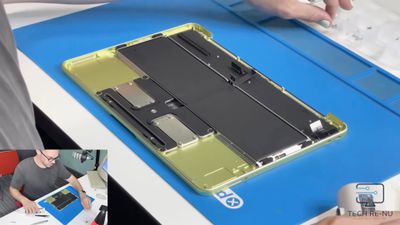
A teardown of the new MacBook Neo by Australian YouTube repair channel Tech Re-Nu reveals what may be the most modular and repair-friendly Mac laptop in recent times.
The Neo is shown being taken apart in just six minutes, suggesting Apple has prioritized simplicity across the board, using standard Torx screws (T3, T5, and T8) and a clean cable routing design.
To open the aluminum body, eight screws on the bottom are loosened, similar to the MacBook Air and MacBook Pro. Inside, a tiny motherboard sits, surrounded by a stripped-back internal layout with minimal parts and no hinge covers.
The battery is secured by 18 screws and lifts straight out – there are no stretch-release adhesive tabs, and no sticky glue holding it in place. In fact, the teardown encountered zero tape throughout the entire disassembly, which is a first for a modern Mac.
The two USB-C ports, speakers, and the headphone jack are all modular, so the individual components can be swapped without replacing larger assemblies. The speakers, for example, come out with just four screws each and no adhesive. Indeed, the only adhesive found in the machine was a small amount on the trackpad where a cable connects it to the mainboard.
Tech Re-Nu does not entirely disassemble the Neo, but we know it is possible to remove the keyboard for repair without replacing the entire top case – which is a huge boost for any repairability score. Taken together, it looks like the $599 MacBook Neo is a lot more repairable than some might have expected for an Apple laptop.
Apple has published its MacBook Neo repair manual, and it reveals some big repairability news: the keyboard can be replaced individually.
For many years, replacing the keyboard in a MacBook has required replacing the entire Top Case, which refers to the top half of the aluminum shell surrounding the keyboard. For example, the latest MacBook Air has a "Top Case with Keyboard" part, and the latest MacBook Pro models have a "Top Case with Battery and Keyboard" part.
For the MacBook Neo, there are separate Keyboard, Keyboard with Touch ID, and Top Case parts, and Apple shows how to replace the keyboard individually. While there are still more than 40 screws involved to replace the keyboard on its own, the process is much easier than replacing an entire Top Case, which requires lots of disassembly.
More importantly for customers, the MacBook Neo's individual keyboard parts will likely be much more affordable when they become available on Apple's self-service store. In the U.S., Top Case parts for recent MacBook Air and MacBook Pro models cost around $400 to $600. The standalone Keyboard and Keyboard with Touch ID parts for the MacBook Neo will likely be hundreds of dollars cheaper by comparison, but exact pricing remains to be seen.
MacBook Neo launched on Wednesday, and it has been praised for its value and performance. Now, improved repairability is another positive.
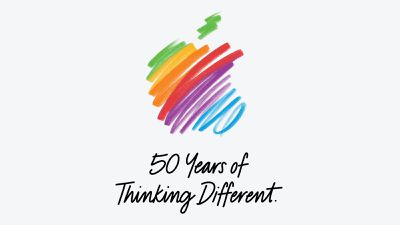
Apple today announced that it will celebrate the company's 50th anniversary over the coming weeks, but it has yet to reveal any specific plans.
Apple was founded on April 1, 1976, so the company will turn 50 on April 1, 2026.
"While Apple is known for looking forward, this milestone offers a special moment to reflect on the journey that has brought the company here, to celebrate the people and communities who have thought different with us, and to honor the enduring values that continue to guide our work," said Apple, in a press release.
Apple said its celebrations will recognize the "creativity, innovation, and impact that people around the world have made possible with Apple technology."
"Thinking different has always been at the heart of Apple," said Apple CEO Tim Cook. "It's what has driven us to create products that empower people to express themselves, to connect, and to create something wonderful. As we celebrate 50 years, we are deeply grateful to everyone who has been part of this journey and who continues to inspire what comes next."
The letter touches on the upcoming 50th anniversary and says that "the world is moved forward by people who think different." For those unaware, "Think Different" was a famous advertising slogan used by Apple in the late 1990s to early 2000s.
"At Apple, we're more focused on building tomorrow than remembering yesterday," said Cook, in the letter. "But we couldn't let this milestone pass without thanking the millions of people who make Apple what it is today."
The letter touches on the upcoming 50th anniversary and says that "the world is moved forward by people who think different." For those unaware, "Think Different" was a famous advertising slogan used by Apple in the late 1990s to early 2000s.
"At Apple, we're more focused on building tomorrow than remembering yesterday," said Cook, in the letter. "But we couldn't let this milestone pass without thanking the millions of people who make Apple what it is today."
Fifty years ago in a small garage, a big idea was born. Apple was founded on the simple notion that technology should be personal, and that belief — radical at the time — changed everything.
April 1st marks 50 years of Apple. From the first Apple computer to the Mac, from iPod to iPhone, iPad to Apple Watch and AirPods, as well as the services we use every day — the App Store, Apple Music, Apple Pay, iCloud, and Apple TV — we've spent five decades rethinking what's possible and putting powerful tools into people's hands. Through every breakthrough, one idea has guided us — that the world is moved forward by people who think different.
That's because progress always begins with someone — an inventor or scientist, a student or storyteller — who imagines a better way, a new idea, a different path. That spirit has guided Apple from the start. But it has never belonged to us alone.
Every invention we bring into the world is just the beginning of a story. The most meaningful chapters are written by all of you — the people who use our technology to work, learn, dream, and discover. You've made breakthroughs and launched businesses. You've cheered up loved ones in the hospital and captured your toddler's first steps. You've run marathons, written books, and rekindled friendships. You've chased your curiosity, found your new favorite song, and shared stories that connect us all.
In your hands, the tools we make have improved lives, and sometimes even saved them. And that is what inspires us — not what technology can do alone, but everything you can do with it.
At Apple, we're more focused on building tomorrow than remembering yesterday. But we couldn't let this milestone pass without thanking the millions of people who make Apple what it is today — our incredible teams around the world, our developer community, and every customer who has joined us on this journey. Your ideas inspire our work. Your trust drives us to do better. Your stories remind us of all we can accomplish when we think different.
If you've taught us anything, it's that the people crazy enough to think they can change the world are the ones who do.
So here's to the crazy ones.
The misfits. The rebels. The troublemakers. The round pegs in the square holes. The ones who see things differently.
Apple's new M5 MacBook Air and M5 Pro/M5 Max MacBook Pro just launched yesterday, and now Amazon has the first cash discounts on these models. You'll find $49 off nearly every new MacBook model on Amazon, without the need of a membership or clipping a coupon.
Note: MacRumors is an affiliate partner with Amazon. When you click a link and make a purchase, we may receive a small payment, which helps us keep the site running.
Before today, the only offers we were tracking were Best Buy gift cards with the purchase of a new MacBook. This makes Amazon's discounts the first cash markdowns on Apple's new products that we've seen so far.
Although these are just $50 discounts, if you're shopping for the brand new MacBook Air and MacBook Pro, it'll be the best deals you can find online right now. Amazon provides an estimated delivery date around March 17 for most of the laptops.
If you're on the hunt for more discounts, be sure to visit our Apple Deals roundup where we recap the best Apple-related bargains of the past week.
Deals Newsletter
Interested in hearing more about the best deals you can find in 2026? Sign up for our Deals Newsletter and we'll keep you updated so you don't miss the biggest deals of the season!


 Note: MacRumors is an affiliate partner with some of these vendors. When you click a link and make a purchase, we may receive a small payment, which helps us keep the site running.









 Note: MacRumors is an affiliate partner with Samsung. When you click a link and make a purchase, we may receive a small payment, which helps us keep the site running.



 Note: MacRumors is an affiliate partner with Amazon. When you click a link and make a purchase, we may receive a small payment, which helps us keep the site running.